

.png)
.png)
.webp)
.webp)
.webp)
Multiple Crises Are Worsening Conditions
Ongoing insecurity, climate change, economic instability, and poor water access have intensified the humanitarian crisis in regions like Afghanistan. These factors continue to impact daily life, making survival more difficult for millions.
Severe Reductions in Food Aid
Significant cuts in food aid have left millions vulnerable to severe hunger. Afghanistan has experienced drastic drops in food assistance, further exacerbating food insecurity across the nation.
Key Facts
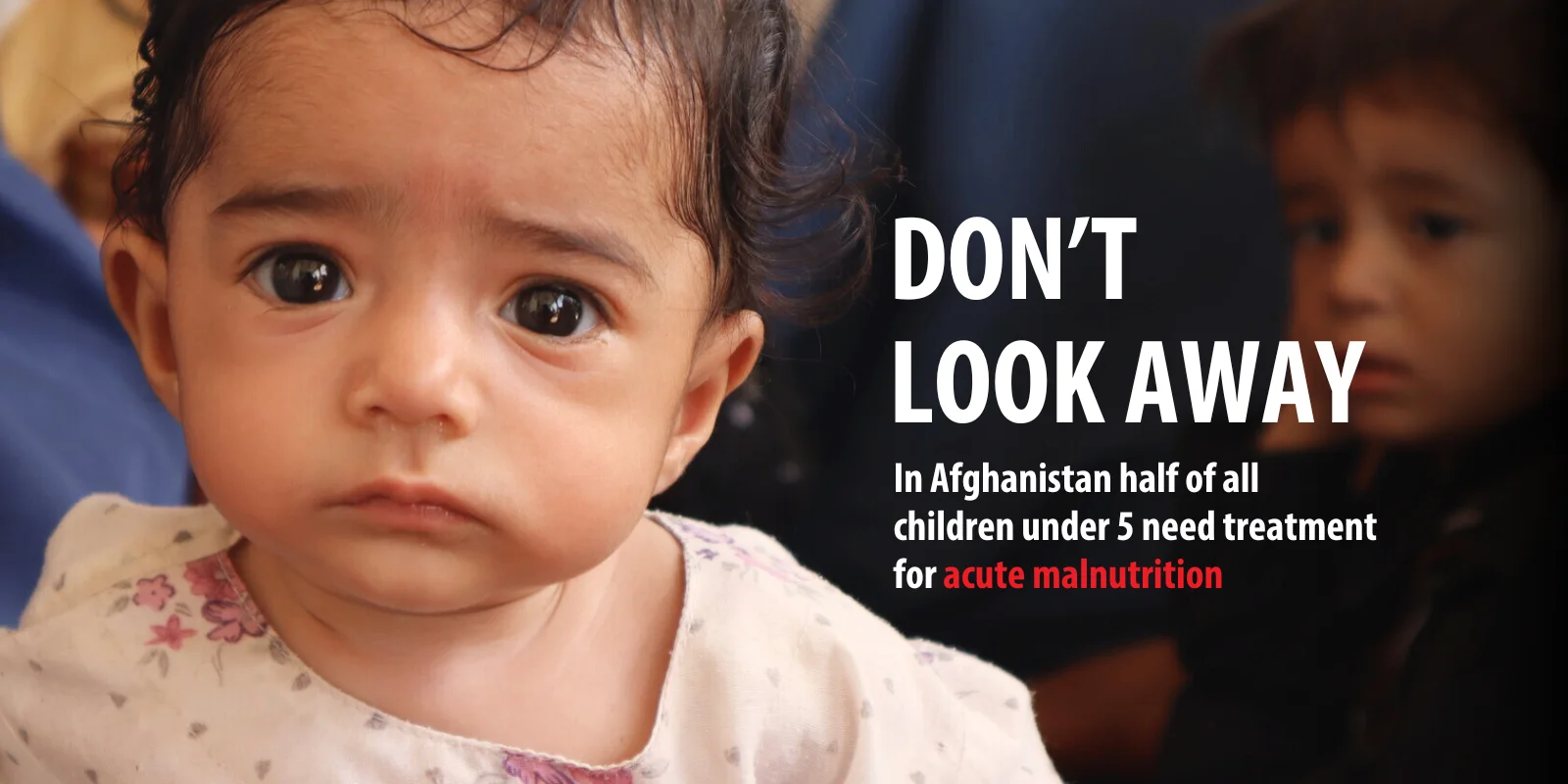
- Malnutrition Crisis: Half of all children under 5, and one in four pregnant and breastfeeding women, require treatment for acute malnutrition.
- Rising Costs and Unemployment: The cost of a basic food basket has increased by 30%, while unemployment has surged by 40%. Food is the highest-reported priority need for 89% of the population.
- High Food Insecurity: Over one-third of Afghanistan’s population (14.2 million people) face high levels of acute food insecurity (IPC phase three or above) due to climate shocks and rising food prices.
- Uncertain Food Access: 1 in 4 Afghans do not know where their next meal will come from

- Outpatient Malnutrition Treatment: We provide treatment for both severe (SAM) and moderate acute malnutrition (MAM) in affected communities.
- Promoting Healthy Feeding Practices: We educate pregnant and breastfeeding mothers, as well as caregivers of malnourished children, on healthy feeding practices.
- Health and Nutrition Clinics: Medair operates clinics in communities affected by displacement and natural disasters, especially in remote areas, to ensure access to malnutrition treatment.
- Cash Assistance for Food: We offer cash assistance to vulnerable families, enabling them to buy nutritious food and meet their essential needs.
"Before Medair came, we had no food, no water, no seeds, no tools. We were starving and desperate. After receiving cash and training from Medair, we were able to buy what we needed, and I started farming again."